
The rise of the knowledge engineer in autonomous scientific systems
Why scientific AI needs people who can turn papers, repositories, protocols, and experimental evidence into context that agents can verify and reuse.
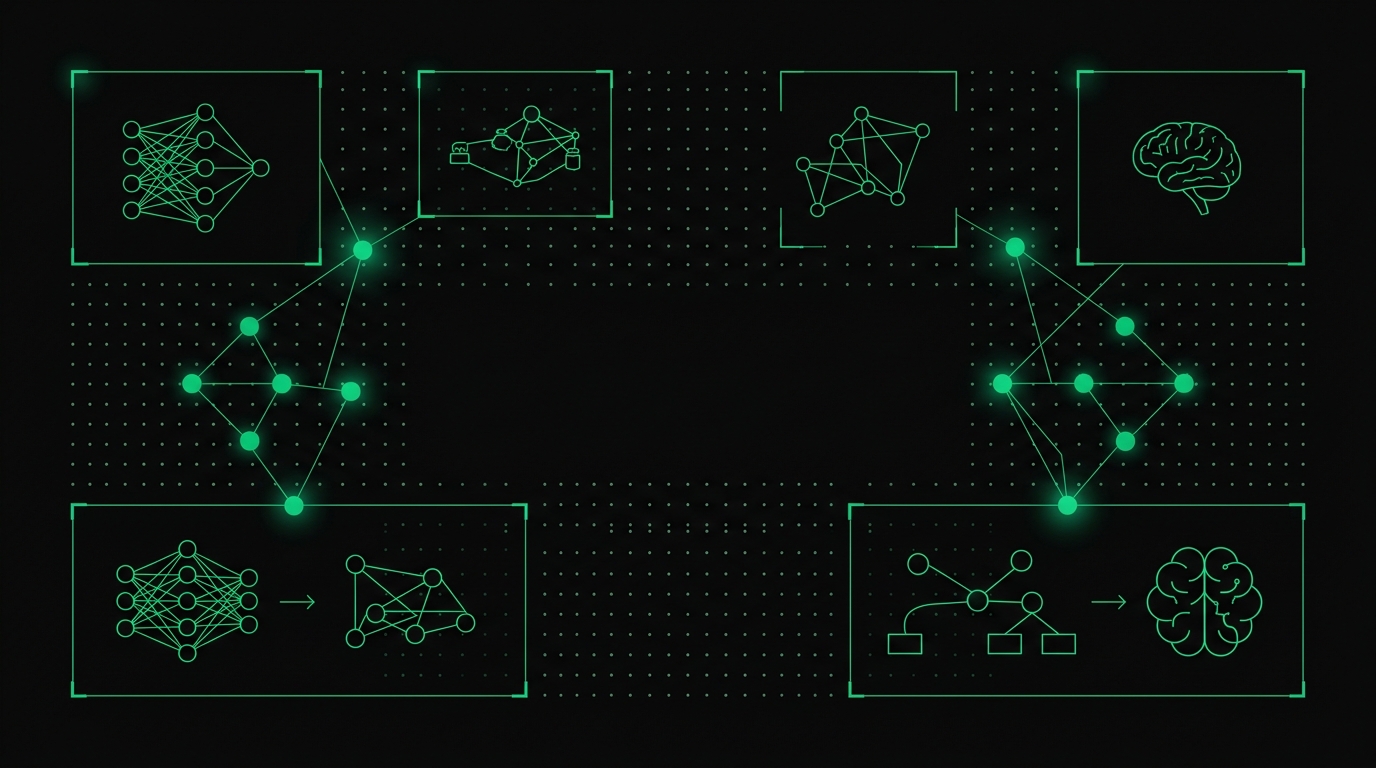
Agents inherit the quality of their context
A model can summarize papers, generate code, and propose experiments. That range creates the impression that the model holds the full research problem. In practice, the work depends on a less visible layer: which sources were selected, whether a protocol still applies, how an assertion connects to evidence, and whether the available tools can execute the proposed step.
When that layer is weak, a capable model operates on stale interfaces and ambiguous claims. It may produce a persuasive answer that cannot be reproduced. Knowledge engineering is the work of making the research context inspectable enough for an agent to use and for a person to audit.
Documentation is necessary but insufficient
Human-readable documentation often relies on shared assumptions. “Run the standard preprocessing step” may be clear inside one laboratory and meaningless outside it. A warning in a paragraph may not reach the agent that selects a tool three stages later.
Knowledge engineers preserve the narrative, then add machine-checkable structure around the parts that affect execution:
interface VerifiedContextNode {
  id: string;
  kind: 'claim' | 'protocol' | 'dataset' | 'tool' | 'result';
  source: string;
  sourceVersion?: string;
  assertions: Array<{
    statement: string;
    evidenceIds: string[];
    status: 'unverified' | 'supported' | 'contested';
  }>;
  validFrom: string;
  supersededBy?: string;
}
The schema does not replace scientific judgment. It exposes where judgment occurred and what evidence it used.
What knowledge engineers build
The role sits between research, systems engineering, and information architecture. Its artifacts are operational rather than decorative.
Source maps
A source map connects claims to papers, repository revisions, datasets, and experimental runs. It records versions and access dates because a database entry or API response can change after an agent uses it.
Tool contracts
Agents need the same clarity that typed programs receive from an interface. A tool contract describes accepted inputs, possible side effects, failure modes, permissions, and expected outputs. Synthetic probes confirm that the active service still matches the contract.
Decision records
A research system should preserve why a method or candidate was chosen. Decision records include alternatives, evidence, constraints, and the condition that would reopen the decision. This stops a later agent from treating preference as fact.
Context projections
No agent should receive the entire knowledge store. A projection selects the records needed for a task while preserving identifiers and provenance. A protein-structure reviewer and an environment builder will receive different views of the same project.
Verification policies
Policies determine which records can enter durable memory. A paper summary may remain unverified until checked against the cited passage. A numerical result should point to the run and artifact that produced it. A tool observation should expire when the service version changes.
The work happens at boundaries
Many failures occur where one representation becomes another: prose becomes a protocol, a protocol becomes code, code produces an artifact, and an artifact becomes a claim. Knowledge engineers make those transitions explicit.
For example, a literature agent may extract a reported assay condition. Before another agent uses it, a verifier checks the cited section, normalizes units, records the organism or cell line, and flags omitted parameters. The execution agent then receives a structured protocol with the original citation attached.
The result is slower than copying a sentence and faster than discovering the omission after an expensive run.
How to measure the role
The output should be judged by research behavior, not the number of documents created. Useful measures include:
- repeated failures avoided because prior evidence was retrieved;
- claims that resolve to a source and specific version;
- tool calls rejected before execution because a contract had drifted;
- time required to reproduce an earlier run; and
- contested conclusions surfaced instead of silently merged.
These measures expose whether the knowledge layer improves the work or merely creates another store to maintain.
A discipline for compounding research
As agent systems become more specialized, the knowledge engineer defines how their work joins together. The role establishes the shared identifiers, provenance rules, and verification gates that let one successful run improve the next.
Our recursive memory architecture describes the records this work produces. Skill Doctor applies the same discipline to tool interfaces, where stale context causes operational failure.